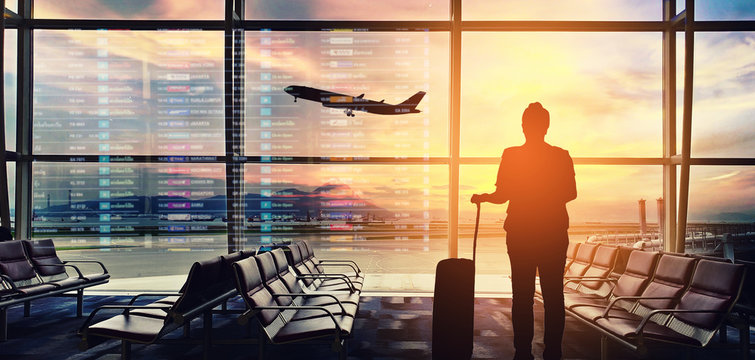
How early do you really need to get to the airport? Nobody wants to be that person sprinting through a terminal hoping to make their flight, but you also don’t want to waste hours unnecessarily sitting around an airport.
The Transportation Security Administration (TSA) does have general guidance for flights, but in reality, there really is no single answer to this question. Arrival time depends on various things including the airport, time of day, time of year, destination and expedited screening programs just to name a few.
Domestic Flights
According to the TSA, you should get to the airport two hours before your domestic flight.
International Flights
For international travel, the TSA advises arriving three hours prior to your flight. This is especially true for your return trip to the United States. Customs pre-screening and agriculture checks abroad can mean double the security checkpoints, which can mean long lines even in off-peak hours.
Do I Really Need to Arrive that Early?
These time estimates should give you time to park, catch the shuttle from the lot, check-in, and get through security. If you’re skipping any of those steps (for example, you’ve already checked in online or are getting dropped off at the door) and are headed to a small or mid-sized airport, you can probably shave off some time.
Here’s a deeper look into some of the variables that may affect your airport arrival time:
Airport Location
Are you flying out of a small private airport or a large one? Massive air hubs like Atlanta’s Hartsfield-Jackson (the busiest in the country) can often take 45 minutes to navigate across, even on off-peak days. The bigger the airport, the more people and longer the lines. *See the complete list of airports to always allow extra time for at the end of the blog.
Time of Flight
Early flight? This will shave some time off the necessary arrival time. Airports are normally less crowded before 9:00 a.m. Some may not even be fully functioning if you show up before 6:00a.m., especially if they’re not a busy air hub. However, if you’re flying during peak hours (9 a.m. to 6 p.m.), on a weekend, on/near a holiday or through a busy airport, it’s always better to be cautious and get there a bit early.
Time of Year
During summer and busy holiday travel days it’s probably wise to add up to an hour for any airports in major cities. Keep in mind this means school breaks also, not just well known calendar holidays. Surprisingly, According to Roger Dow of the U.S. Travel Association the busiest travel days of the year are “Fridays, June, July and August.” Summer is the busiest travel season, and weekends are the days most in demand. Followed by Thanksgiving, Christmas, July 4th, Memorial Day, Spring Break, New Years Eve, Labor Day and Easter.
Checked In Online?
Whenever possible you should try and check in online. Most airlines let you check-in up to 24 hours before your flight’s departure. This will save you a lot of time, so definitely do it if you can. Keep in mind that if you have to check-in at the airport, most airlines have a check in cutoff, generally about one hour before the scheduled departure time (double check with your air carrier to confirm). Also keep in mind it’s not always possible to check-in online or get a mobile boarding pass in other countries. So you may need to stand in a check in line which also has the added step of passport checks.
Baggage
Travelling with a checked bag will require you to show up earlier at the airport. Most airlines have strict baggage check-in requirements and won’t accept luggage being dropped off past a certain time limit (normally around 45 minutes prior to your departure).This should be indicated on your ticket. If not, check the airline’s website to familiarize yourself with your airline’s checked baggage policies so your checked bag isn’t turned away at the departure counter.
Security
If you have TSA PreCheck, Clear or Global Entry, you can probably take away at least half an hour you’d otherwise spend standing in a security line. Be sure to always confirm your membership isn’t expired and your airport is one that participates in the program you plan to use.
Conclusion
For additional airport information you can download the MyTSA app to help figure out your arrival time. The app will tell you how busy the airport is likely to be on your specific day and time of travel based on historical data. You can also always check your airline’s website to know when they experience peak times and days. Or just google “peak times [airport name]”.
As you can see, there really is no magic time that’s right. You need to look at the whole picture and decide what works best for you. Sitting in a terminal a little longer than you’d like is usually a much better option than a missed flight!
*Note you should always budget extra time if flying in or out of any of the following airports:
- New York (JFK)
- Atlanta (ATL)
- Chicago (ORD)
- Los Angeles (LAX)
- Dallas (DFW)
- Paris (CDG)
- Aruba (AUA)
- St. George, Bermuda (BDA)
- Bahamas (NAS and FPO)
- London Heathrow (LHR)
- Abu Dhabi (AUH)
- Dublin, Ireland (DUB)
- Canada (YYC, YEG, YHZ, YUL, YOW, YYZ, YVR, YWG)
- Tokyo Haneda (HND)
- Dubai (DXB)
- Athens, Greece (ATH)
- Moscow, Russia (DME)

